The gripper is not an afterthought
The robot is the platform. The gripper is what actually touches the part. A well-integrated robotic cell with a poor gripper design underperforms. A modestly-integrated cell with an excellent gripper often runs great.
Yet gripper design gets treated as a specification detail rather than an engineering discipline. The result is field reliability problems blamed on the robot when the root cause is the gripper.
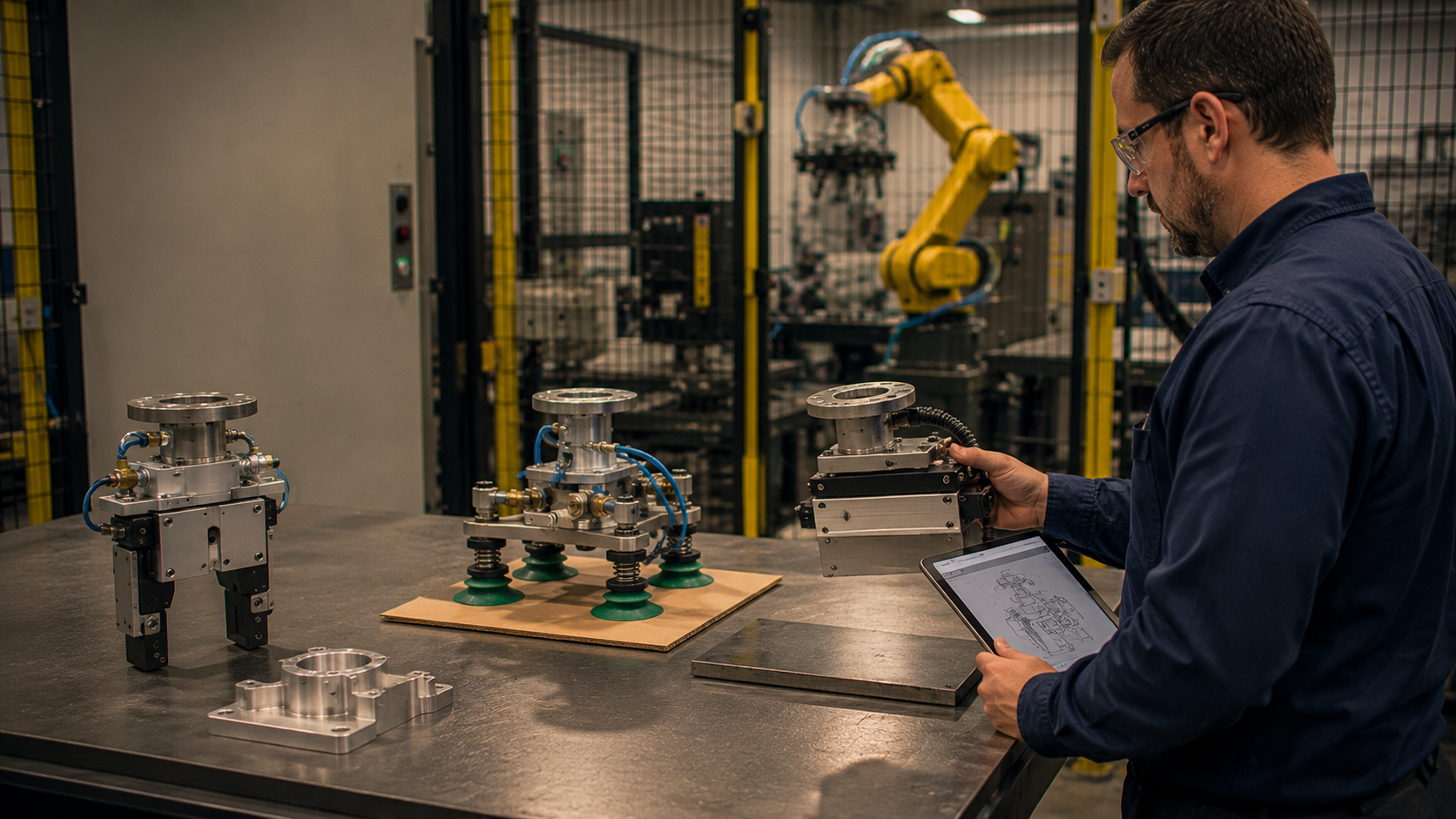
The four gripper categories
Mechanical (parallel or angular)
Two- or three-jaw grippers with pneumatic or servo actuation. Physical clamping force applied to the part.
Where it fits: rigid parts with defined grip surfaces, applications where clamp force is required, environments where vacuum or magnetic isn't appropriate.
Vacuum
Suction cups or vacuum pads pulling on flat, non-porous surfaces. Requires vacuum generation (pump or venturi).
Where it fits: sheet metal, glass, plastic packaging, flat parts with sealable surfaces, high-cycle applications where speed matters.
Magnetic
Permanent or electromagnetic gripping on ferrous parts. Fast attach and release, no clamping stress on the part.
Where it fits: steel stampings, sheet metal handling, ferrous parts that can tolerate residual magnetization.
Specialty (Bernoulli, needle, adhesive, soft)
Application-specific grippers for parts that don't fit the standard categories. Bernoulli grippers for delicate parts (no contact). Needle grippers for fabric or foam. Adhesive grippers for smooth non-magnetic parts. Soft grippers for irregular or fragile parts.
The five spec questions that decide gripper choice
1. What are the part's physical characteristics?
Material, weight, dimensions, surface finish, and rigidity all constrain gripper options. A magnetic gripper can't handle aluminum. A vacuum cup can't handle a rough casting. Mechanical fingers can crush a delicate part.
2. What is the required cycle time?
Vacuum and magnetic grippers cycle faster than mechanical (no jaw travel time). If the application requires sub-second attach/release cycles, mechanical usually loses.
3. What is the part orientation variance?
If parts arrive in known orientations, standard grippers work. If parts vary in orientation, the gripper needs to accommodate the variance or requires upstream orientation.
4. What are the environmental constraints?
Wet, oily, or dusty environments defeat vacuum. Magnetic grippers work in dirty environments but leave residual magnetization. Mechanical grippers work most places but need protection in corrosive environments.
5. What is the failure mode tolerance?
If the gripper drops a part, what happens? A dropped sheet in a stamping line is a scheduling issue. A dropped high-value assembly is scrap. A dropped hazardous part is a safety incident. The failure mode risk should drive redundancy design (backup grip, sensor verification, drop-detection).
Common gripper design failures
- Vacuum pad selection based on advertised lift capacity without accounting for real seal conditions
- Mechanical jaw force set for maximum capability, crushing delicate parts
- Magnetic gripper on parts that need to remain non-magnetized for downstream processes
- Standard grippers on parts with feature variance the gripper can't accommodate
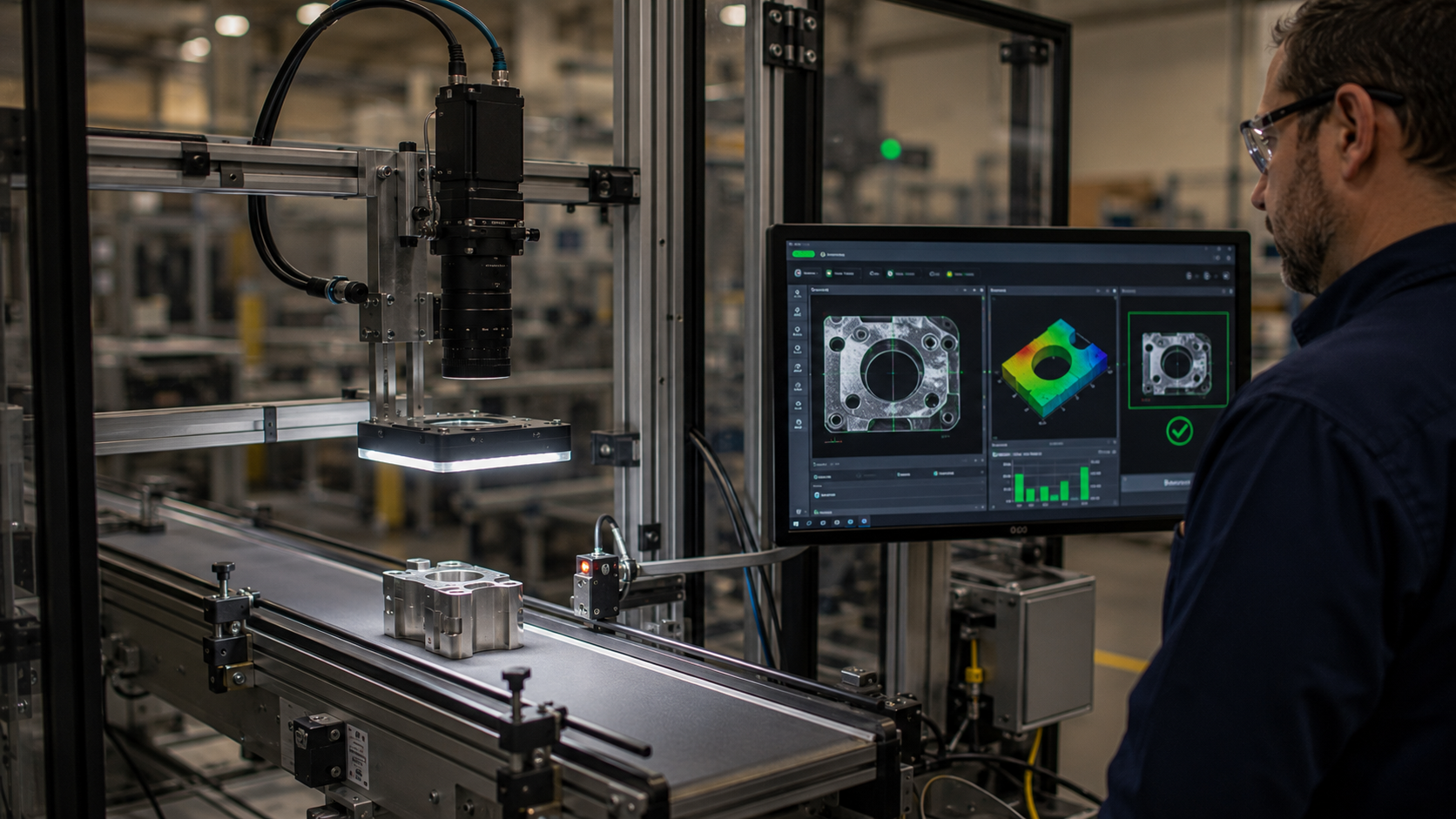
- No verification sensor to detect grip failure before the robot moves
The DPG view
Every robotic cell CSM Robotics builds includes an engineered end-of-arm tooling design. That includes gripper selection, force calculation, verification sensors, and failure-mode analysis. If you have a cell with recurring pick reliability problems, gripper redesign is often the fix.
.webp)

%20(37).png)