The two paths
Off-the-shelf packaging equipment: standalone case erectors, sealers, palletizers, wrappers, and labelers from established equipment OEMs. Proven platforms, faster to procure, lower engineering risk, and higher per-unit cost.
Custom-integrated packaging automation: an integrator designs and builds the packaging line specifically for your product mix, throughput, and constraints. Longer lead time, more engineering, more risk, but tighter fit and lower long-term cost if the fit is right.
When off-the-shelf wins
- Standard packaging formats (regular slotted case, standard pallet dimensions)
- Moderate throughput where standard equipment cycle times are sufficient
- Product mix that fits standard equipment envelope
- Fast time-to-production is the priority
- Ongoing service and parts support required (OEM support networks)
For most operations packaging standard product at standard volumes, off-the-shelf is the right call. The standard equipment ecosystem has evolved over decades to solve most packaging problems at a competitive price point.
When custom-integrated wins
- Non-standard packaging formats or dimensions
- High-mix production requiring rapid changeover between formats
- Throughput requirements that exceed standard equipment ratings
- Space constraints requiring compact or non-standard line layouts
- Integration with unusual upstream or downstream equipment
Custom-integrated makes sense when the constraint driving the packaging line is outside what standard equipment handles well. Custom is not cheaper. It is more capable for specific requirements.
The hybrid that actually gets built most often
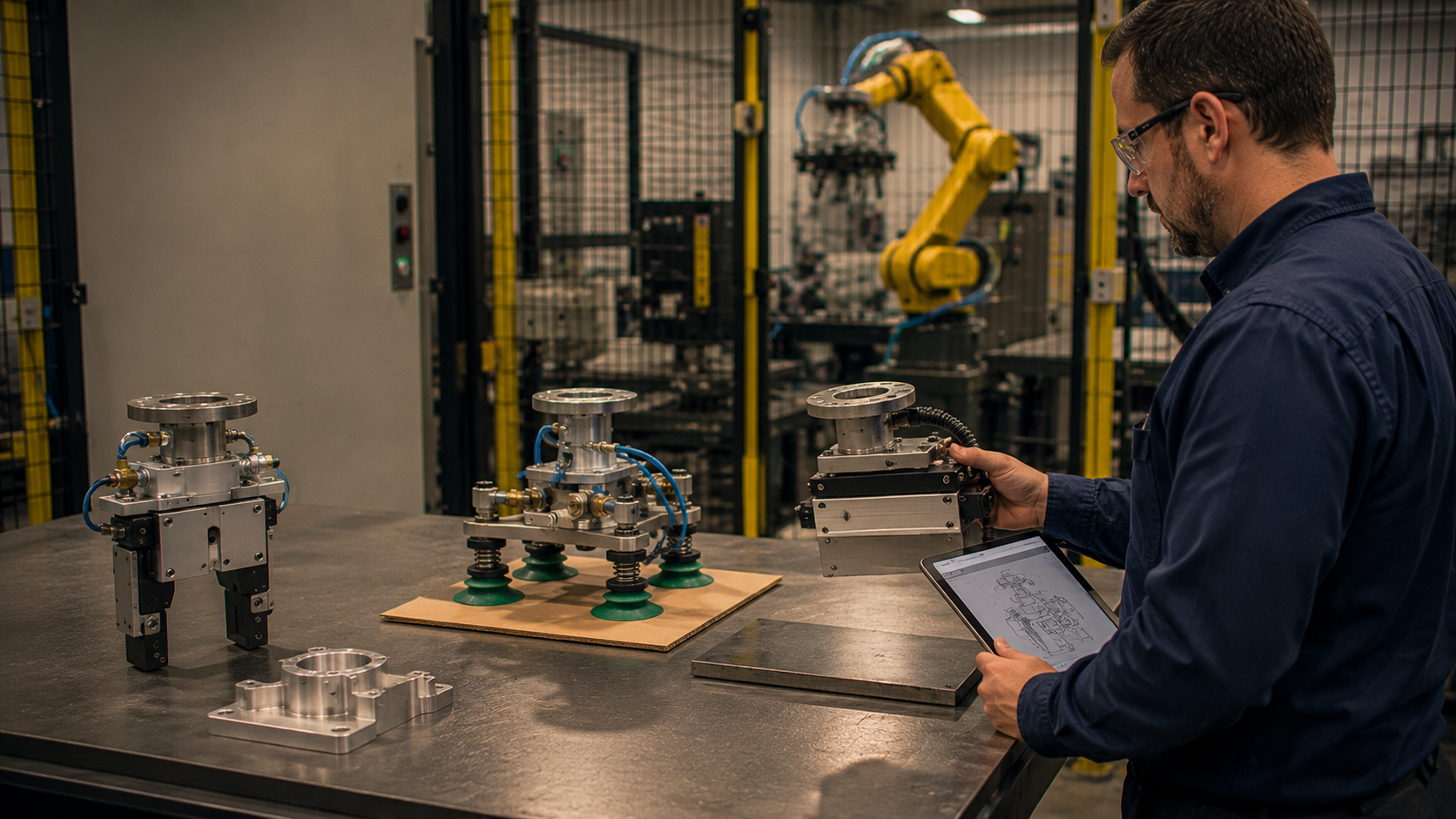
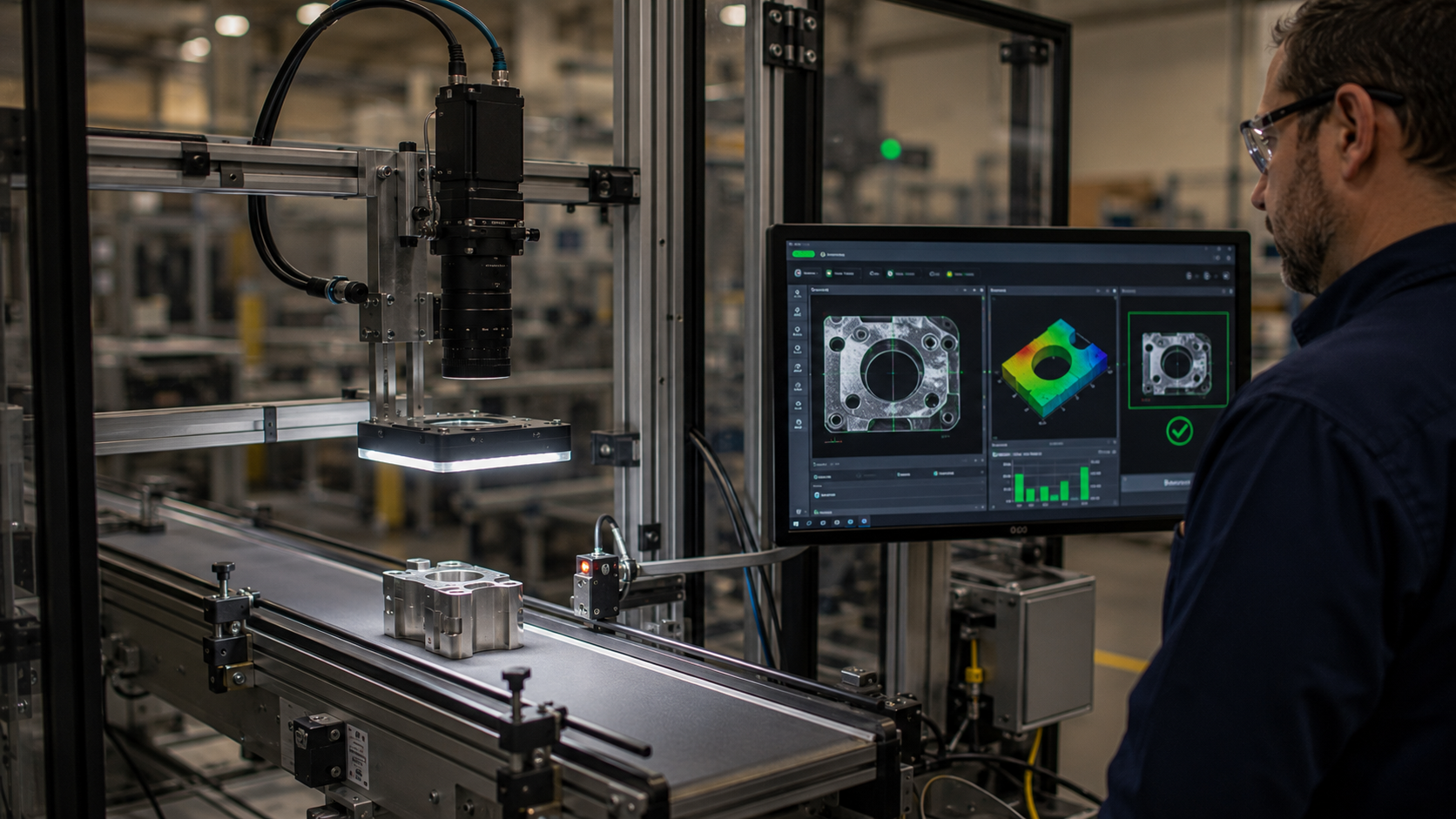
Most end-of-line packaging automation is a hybrid: off-the-shelf equipment integrated by a systems integrator into a coordinated line. The case erector is off-the-shelf. The sealer is off-the-shelf. The palletizer is a Kawasaki BX or Fanuc M-410 with custom end-of-arm tooling. The integrator ties the equipment together with a control system, conveyors, and vision.
This model gets you: proven equipment reliability, integration flexibility, and lower engineering risk than full custom builds.
The five questions to answer before you decide
- What is the throughput requirement, and what does the peak-vs-average look like?
- How many SKUs cycle through the line, and what is the changeover frequency?
- What are the physical space constraints for the line?
- What are the upstream (production) and downstream (warehouse) interfaces?
- What is the operator staffing model — fully automated, operator-supervised, or operator-loaded?
The answers usually make the buy-vs-build decision straightforward. Skipping these questions and going straight to equipment selection is the most common source of overspend and underperformance in packaging automation projects.
Summit Core Tech's role
Summit Core Tech (formerly Postmatic) designs and builds industrial automation OEM equipment, including packaging automation systems. When the decision is off-the-shelf, we spec the integration. When the decision is custom, we design and build the line. If you are early in a packaging automation project and want a vendor-neutral view on which path fits, that is a conversation we run.
.webp)

%20(37).png)