Insights & Innovations in Automation

Recent thought leadership content.

Latest Blog

Our news & articles

What are the levels of automation in factory operations?

The evolution of industrial technology has completely transformed the manufacturing landscape through Factory automation, enabling systems to streamline operations, boost efficiency, and enhance scalability like never before. By integrating advanced technologies such as IoT, AI, and robotics, factories are now capable of achieving unprecedented levels of precision and productivity. 

What is a Factory Automation System?

Factory automation systems are transforming the manufacturing landscape by bringing efficiency, precision, and innovation to production processes. By integrating advanced technologies, factory automation systems replace many manual tasks with automated solutions, making production faster and more reliable. 

What is an Autonomous Factory?

Autonomous factories are at the forefront of factory automation, representing a leap forward in efficiency and adaptability. For example, they utilize AI algorithms for predictive maintenance, detecting and addressing equipment issues before they impact production. Machine learning enhances process optimization, while IoT connects machines to enable seamless communication and data sharing across networks. With automation systems working tirelessly, manufacturers can reduce labor costs, waste, and errors.

What is an Example of Manufacturing Automation?

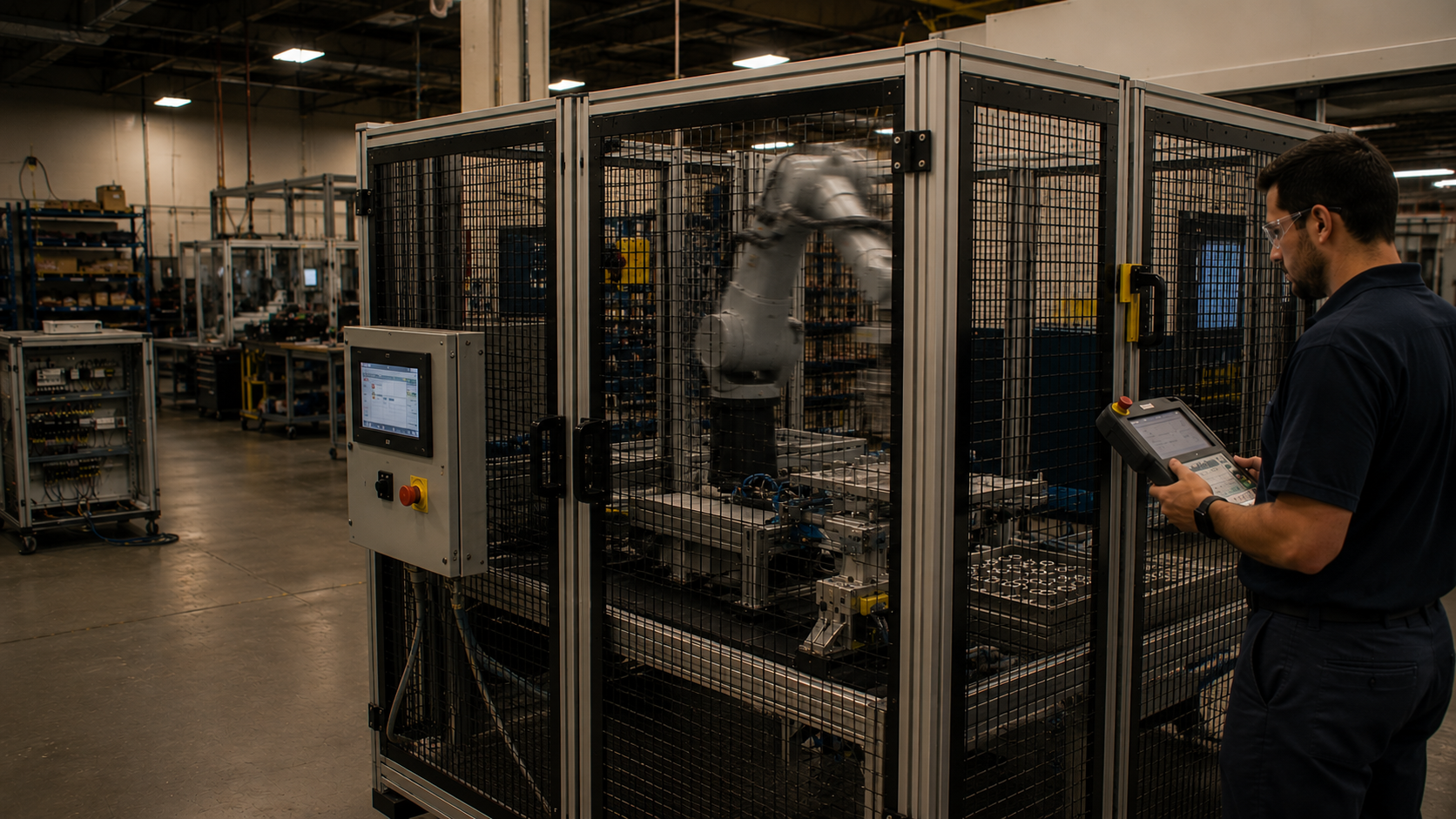
Automation in manufacturing has transformed industries by streamlining processes, enhancing precision, and boosting efficiency like never before. Automation technologies such as robotic arms on assembly lines, automated quality control systems, and AI-powered predictive maintenance are reshaping modern factories by reducing human error, cutting production times, and lowering costs.

Industrial Automation

Industrial automation is a transformative force in modern manufacturing, enabling industries worldwide to enhance efficiency and productivity. This advanced field involves the design, development, and implementation of systems that streamline industrial processes. As a core aspect of Factory Automation, it addresses critical challenges such as evolving customer demands and intense global competitiveness. 

Benefits of Automation in Manufacturing

For manufacturers, engineers, and plant managers, understanding the benefits of automation is key. Automation boosts efficiency, reduces operational costs, and improves consistency in production. These efficiencies not only help companies scale but also allow them to allocate resources more effectively, focusing on innovation and growth rather than manual processes.

Factory Automation Systems

The practical benefits of factory automation are far-reaching, touching every aspect of production and operations. Businesses implementing automation typically achieve enhanced efficiency, as automated systems operate faster and more consistently than traditional methods. This leads to significant reductions in human error, ensuring higher-quality products and more reliable outcomes. 

What is Automation in a Factory?

At its core, factory automation involves using machines, robotics, and advanced software to handle tasks that were once performed manually. From the basics of factory automation such as conveyor belts and robotic arms, to the advanced possibilities of autonomous systems powered by artificial intelligence, automation is continuously evolving to meet modern production demands. 

Let’s Build the Future of Manufacturing Together

If you're looking for a trusted partner to optimize your production processes and unlock new growth opportunities, we’re here to help. Let’s connect and discuss how we can transform your operations with innovative manufacturing and automation solutions.

Lets Connect!
Send Icon